What to Expect From a Liver Cancer Blood Test: From Blood Collection to Results
Blog What to Expect From a Liver Cancer Blood Test: From Blood…

A liver cancer blood test may help support screening conversations for people at higher risk of hepatocellular carcinoma (HCC), the most common type of primary liver cancer. MoleculeDx focuses on blood‑based testing for early liver cancer detection and is designed to help eligible patients and providers take the next step with physician‑guided follow‑up.
Traditional surveillance often relies on ultrasound and basic lab markers that can miss early‑stage disease—especially in patients who feel well and have no obvious symptoms. A more advanced, multi‑signal liver cancer blood test aims to close that gap.
A liver cancer blood test is a laboratory test that analyzes a blood sample for biological signals associated with liver cancer. Historically, this has focused on a single marker such as alpha‑fetoprotein (AFP), a protein produced by the liver. Elevated AFP levels can sometimes indicate HCC, but AFP alone detects only about 40–60% of cases and can remain normal even when cancer is present.
Newer approaches, like MoleculeDx, go beyond a single marker. Instead of looking only at one protein, the test examines multiple biological signals in the blood, including cancer‑specific fusion gene transcripts linked to early‑stage HCC.
In simple terms:
The goal is to detect liver cancer earlier, when it is still small, potentially curable and before symptoms appear.
Not everyone needs a liver cancer blood test. Screening is generally focused on people with higher‑than‑average risk, including those who:
For these high‑risk groups, professional guidelines often recommend regular surveillance, typically every 6 months, to catch HCC early.
In reality, many patients:
A liver cancer screening blood test that can be done from home—like the one offered by MoleculeDx—may make it easier for these patients to stay on top of their screening plan.
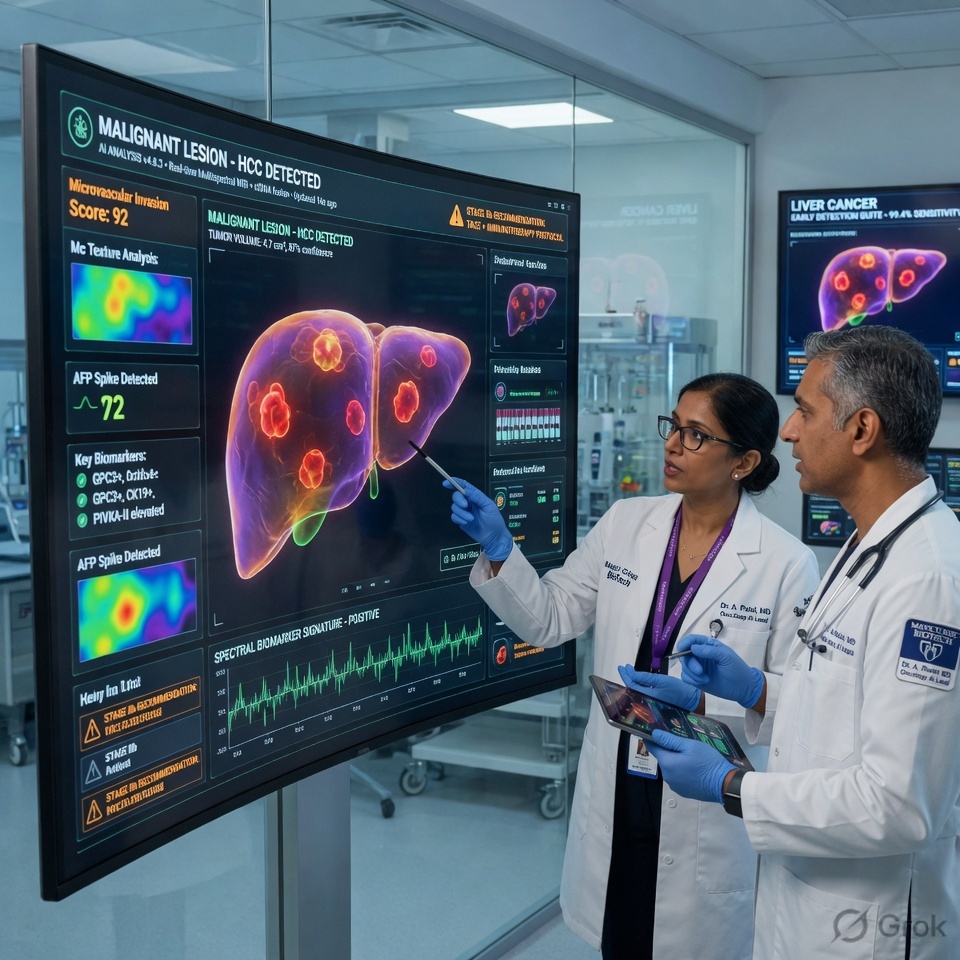
MoleculeDx was designed specifically for early liver cancer detection using a blood‑based, multi‑signal approach. It is built on the proprietary Fusion‑detect™ AI genomics platform, which has been trained and refined using data from tens of thousands of patient samples.
Instead of relying on AFP alone, MoleculeDx:
Clinical validation data show:
By contrast, traditional tools such as AFP and ultrasound alone perform significantly lower for early disease. The MoleculeDx liver cancer blood test is therefore positioned as a more precise and informative screening option for high‑risk patients—particularly those for whom standard tests may be inconclusive or difficult to access.
MoleculeDx was built to fit into real life. The process is designed to be simple for both patients and clinicians.
Patients or physicians start by visiting the MoleculeDx website and checking whether the individual meets basic high‑risk criteria (such as cirrhosis, hepatitis B/C or NAFLD/NASH). If eligible, a liver cancer blood test appointment can be booked online.
A certified phlebotomist visits the patient at home, takes a standard blood sample and ships it to the MoleculeDx lab via controlled cold‑chain logistics.
In the lab, MoleculeDx uses its CLIA‑certified processes to extract and analyze the fusion gene transcripts in the blood. The Fusion‑detect™ AI engine then evaluates multiple signals together to determine whether the pattern is more consistent with high or low risk of HCC.
Patients receive a secure, digital report—typically within 24 hours of the blood draw—showing whether the test result suggests low risk or elevated risk of liver cancer at the time of testing.
If the result is concerning, the report encourages follow‑up with a physician for additional imaging, specialist referral or further evaluation as appropriate.
A liver cancer blood test like MoleculeDx provides important information, but it is not a stand‑alone diagnosis or a replacement for medical judgment.
In other words, a liver cancer screening blood test is best used as a decision‑support tool—one that helps patients and physicians decide when further investigation is needed.
You should always discuss liver cancer screening with a healthcare professional, especially if any of the following apply to you:
A physician can:
Can liver cancer be detected by a blood test?
Yes, liver cancer can sometimes be detected by a blood test, especially when advanced molecular methods are used. Traditional tests like AFP miss many early cancers, but multi‑signal blood tests that analyze fusion gene transcripts and other biomarkers have shown much higher accuracy for early HCC detection.
Is a blood test a replacement for imaging?
No. A liver cancer blood test is meant to support early detection and surveillance—not replace ultrasound, CT or MRI when those are needed. Abnormal blood test results should be followed by imaging and specialist evaluation.
Who is considered high risk for liver cancer?
High‑risk groups typically include people with cirrhosis (from any cause), chronic hepatitis B or C, advanced NAFLD/NASH, and those with a strong family history of liver cancer. Your physician can confirm your personal risk level and recommend a screening plan.
How do I book the MoleculeDx test?
You can start by visiting the MoleculeDx website, checking your eligibility and booking a liver cancer blood test appointment online. In many cases, a phlebotomist can come to your home for the blood draw, and results are delivered digitally in about 24 hours.
If you have cirrhosis, hepatitis B or C, NAFLD/NASH, or another liver cancer risk factor, now is the time to take screening seriously. A liver cancer blood test like MoleculeDx may help catch disease earlier—when more treatment options are available and outcomes are better.
Talk with your physician about whether you are a candidate for early HCC screening, and if appropriate, check your eligibility or book your MoleculeDx test today.
Blog What to Expect From a Liver Cancer Blood Test: From Blood…
Blog Liver Cancer Blood Markers: What Do They Tell Us? Blood tests…
Blog 5 Benefits of Regular Liver Cancer Surveillance for People at High…