What Is Hepatocellular Carcinoma (HCC) Liver Cancer and Who Needs Screening?
If you are searching for “What is HCC liver cancer?” the simple answer is this: hepatocellular carcinoma, or HCC, is the most common type of primary liver cancer. Hepatocellular Carcinoma (HCC) Screening Guidelines help people at higher risk understand when to get checked, which tests may be used, and why regular follow-up can make a life-changing difference.
MoleculeDx supports early liver cancer detection through blood-based screening options for eligible high-risk patients. Its Fusion-detect™ test is designed to help identify liver cancer-related molecular signals from a blood sample as part of a doctor-guided screening plan.
HCC often develops quietly. Many people do not feel pain, notice weight loss, or see obvious symptoms in the early stages. That is why screening is important for people with chronic liver disease, cirrhosis, hepatitis, fatty liver disease, or a family history of liver cancer.
What Does Hepatocellular Carcinoma (HCC) Mean?
Hepatocellular carcinoma means cancer that begins in hepatocytes, the main working cells of the liver. These cells help the body process nutrients, filter toxins, produce bile, and support normal metabolism.
When the liver is damaged over many years, healthy tissue can be replaced by scar tissue. Severe scarring is called cirrhosis. Cirrhosis is one of the strongest risk factors for HCC because long-term inflammation can lead to abnormal cell changes.
HCC screening is not the same as a diagnosis. Screening helps identify warning signs early. If a screening result is abnormal, a doctor may recommend ultrasound, CT, MRI, repeat blood testing, or specialist evaluation.
Who Is at Risk of Hepatocellular Carcinoma (HCC)?
People with long-term liver disease have a higher risk of HCC. The risk becomes more serious when liver damage has progressed to advanced fibrosis or cirrhosis.
Common risk factors include:
- Cirrhosis from any cause
- Chronic hepatitis B infection
- Chronic hepatitis C infection
- Advanced fatty liver disease
- NASH or advanced NAFLD
- Alcohol-related liver disease
- Family history of liver cancer
- Certain inherited liver conditions
- Long-term liver inflammation or scarring
Not everyone with liver disease will develop liver cancer. However, anyone with these risk factors should speak with a healthcare professional about whether HCC screening is appropriate.
Who Should Undergo HCC Screening?
People at high risk for liver cancer should undergo HCC screening based on medical advice. Screening is commonly recommended for patients with cirrhosis, chronic hepatitis B, chronic hepatitis C with advanced liver disease, and advanced fatty liver disease.
Patients with chronic hepatitis B may need HCC surveillance even before cirrhosis develops. Doctors may consider age, family history, viral activity, liver condition, and overall health before recommending a screening schedule.
Patients who completed hepatitis C treatment may still need screening if they already have cirrhosis. Successful treatment can reduce liver cancer risk, but advanced liver scarring may still require long-term monitoring.
What Are the Current Hepatocellular Carcinoma (HCC) Screening Guidelines?
Current Hepatocellular Carcinoma (HCC) Screening Guidelines generally recommend regular surveillance for eligible high-risk patients. In many cases, screening is performed every six months.
The purpose of regular surveillance is to detect liver cancer before symptoms appear. HCC found at an earlier stage may be easier to treat than cancer found after it has grown or spread.
Common HCC screening methods include:
- Liver ultrasound
- AFP blood test
- Blood-based liver cancer screening
- Follow-up CT or MRI when needed
A doctor chooses the right screening plan based on the patient’s risk level, liver condition, previous test results, and overall health.
How Often Should HCC Screening Be Performed?
Most eligible high-risk patients are advised to complete HCC screening every six months. This schedule gives doctors a better chance of finding small tumors earlier, when treatment options may be broader.
Patients should not wait for symptoms before getting screened. Early HCC may not cause pain, jaundice, appetite loss, swelling, or unexplained weight loss.
If a screening result is unclear or abnormal, the doctor may recommend repeat testing, CT, MRI, or referral to a liver specialist. The next step depends on the patient’s medical history and screening findings.
What Tests Are Used for HCC Screening?
HCC screening often uses a combination of imaging and blood-based testing. Each test gives different information, and together they help doctors decide whether more evaluation is needed.
Liver Ultrasound
Ultrasound is one of the most commonly used liver cancer screening tests. It is non-invasive, does not use radiation, and helps doctors look for suspicious areas in the liver.
In some people, ultrasound may be harder to interpret. This can happen in patients with obesity, advanced cirrhosis, or poor liver visibility. In these cases, doctors may consider CT or MRI for clearer imaging.
AFP Blood Test
AFP, or alpha-fetoprotein, is a blood marker that may rise in some people with liver cancer. It is often used along with ultrasound to support HCC surveillance.
AFP can be helpful, but it is not perfect. Some people with early HCC may have normal AFP levels, while some non-cancer liver conditions can also raise AFP. This is why AFP should not be used alone to diagnose liver cancer.
Blood-Based Liver Cancer Screening
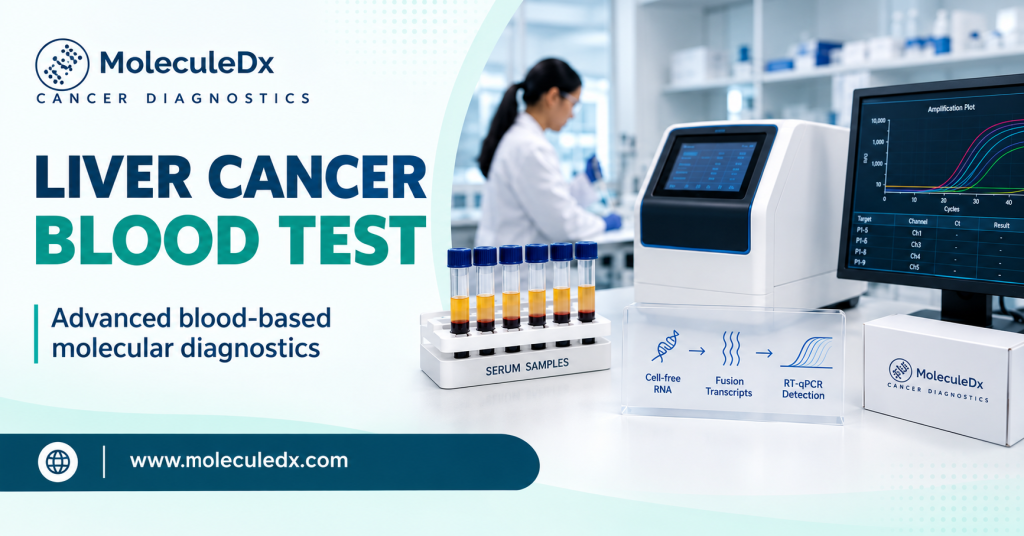
Blood-based liver cancer screening looks for cancer-related signals in a blood sample. These tests may support early liver cancer detection in eligible high-risk patients, especially those who need regular surveillance or additional biomarker support.
Blood-based tests can help start timely conversations between patients and doctors. If a result is abnormal, follow-up imaging or specialist review may be needed.
Can a Blood Test Detect Liver Cancer?
A blood test can help detect signs linked to liver cancer, but it usually cannot confirm liver cancer by itself. Blood tests work best when they are part of a complete screening and follow-up plan.
Newer biomarker-based tests may look beyond AFP and identify molecular signals related to hepatocellular carcinoma detection. Doctors may combine blood results with ultrasound, CT, MRI, liver function tests, and medical history to decide the safest next step.
How Accurate Is MoleculeDx for HCC Screening?
According to MoleculeDx, its Fusion-detect™ blood-based screening technology offers up to 95% accuracy for HCC detection. The test is designed to identify HCC-related molecular signals that standard AFP testing may miss.
This is important because some patients with liver cancer can have normal AFP levels. A blood-based molecular approach may provide additional screening support for high-risk patients who need closer monitoring.
MoleculeDx should be understood as a screening support tool, not a final diagnostic test. Any abnormal result should be reviewed by a qualified healthcare professional and followed with appropriate imaging or specialist evaluation.
Why Is Early Liver Cancer Detection Important?
Early liver cancer detection can change the treatment conversation. When HCC is found earlier, patients may have more options, including surgery, ablation, liver transplant evaluation, or liver-directed therapy.
When liver cancer is found late, treatment can become more difficult. Regular screening gives patients, caregivers, and doctors more time to plan care, review treatment choices, and act before the disease becomes advanced.
How MoleculeDx Supports HCC Screening Guidelines
MoleculeDx supports Hepatocellular Carcinoma (HCC) Screening Guidelines by offering blood-based liver cancer screening for eligible high-risk patients. Its Fusion-detect™ platform is designed to identify molecular signals related to HCC from a standard blood sample.
This may be helpful for people with cirrhosis, hepatitis B, hepatitis C, advanced fatty liver disease, or other liver cancer risk factors who need regular monitoring.
MoleculeDx does not replace ultrasound, CT, MRI, biopsy, or physician diagnosis. Instead, it adds blood-based biomarker support to a complete screening approach and encourages timely follow-up with a healthcare professional.
Book Your Consultation
If you have chronic liver disease, cirrhosis, hepatitis B, hepatitis C, advanced fatty liver disease, or a family history of liver cancer, it is important to understand your HCC screening options.
Book your consultation with MoleculeDx to discuss blood-based liver cancer screening, early detection, and the right next step for your health.
Book Your Consultation
Conclusion
HCC is a type of liver cancer that can develop silently in high-risk patients. Following Hepatocellular Carcinoma (HCC) Screening Guidelines can help detect liver cancer earlier and support better care decisions.
FAQs
1. What is HCC liver cancer?
HCC, or hepatocellular carcinoma, is the most common type of primary liver cancer. It starts in the main cells of the liver, called hepatocytes.
2. Who needs HCC screening?
People with cirrhosis, hepatitis B, hepatitis C, advanced fatty liver disease, or other liver cancer risk factors may need HCC screening.
3. How often is HCC screening done?
Most high-risk patients are advised to complete HCC screening every six months, based on their doctor’s recommendation.
4. Can blood tests detect liver cancer?
Blood tests can help detect liver cancer-related signals, but abnormal results should be reviewed by a doctor and may need imaging confirmation.
5. Is MoleculeDx a diagnostic test?
No. MoleculeDx supports screening. A liver cancer diagnosis should be made by a qualified healthcare professional using clinical evaluation and appropriate imaging.
6. Is HCC screening painful?
Most HCC screening methods are simple. Ultrasound is non-invasive, and blood-based screening requires only a standard blood sample.
7. Why is early HCC detection important?
Early detection may give patients more treatment options and help doctors plan care before liver cancer becomes advanced.
8. What is AFP in liver cancer screening?
AFP is a blood marker that may rise in some liver cancer cases. It can support screening, but it should not be used alone.
9. When should I talk to a doctor about HCC screening?
Talk to a doctor if you have cirrhosis, hepatitis, fatty liver disease, chronic liver inflammation, or a family history of liver cancer.
Read more about: https://www.moleculedx.com/who-should-get-hcc-screening/
Contact us : facebook , Instagram