At-Home Blood Draw for Cancer Screening: What It Means and How It Works
An at-home blood draw for cancer screening means a trained phlebotomy professional collects a blood sample from your home instead of requiring you to visit a clinic or diagnostic center. The sample is then sent to a qualified laboratory for testing. For eligible patients, this can make blood-based cancer screening more convenient.
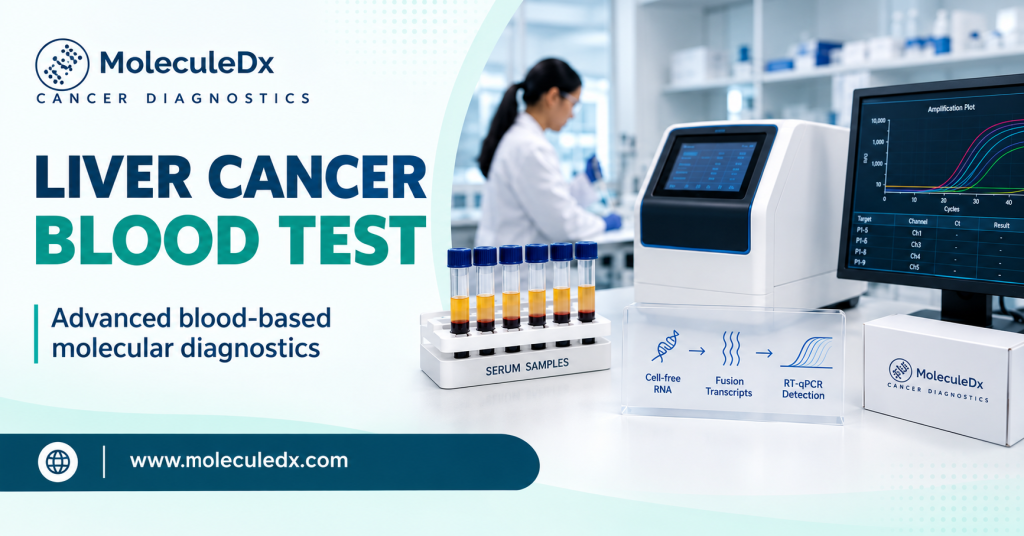
Cancer screening means checking for cancer before symptoms appear. The CDC explains that screening can help find breast, cervical, colorectal, and lung cancers early, when treatment is more likely to work well. MoleculeDx focuses on blood-based early detection for liver cancer, also called hepatocellular carcinoma or HCC, and describes its Fusion-detect™ test as an at-home blood test with digital results.
Why At-Home Blood Draw for Cancer Screening Matters
Many people delay screening because of travel, busy schedules, anxiety, mobility issues, or difficulty booking appointments. For people at higher risk, these delays can be important.
An at-home blood draw helps reduce one common barrier: sample collection. Instead of visiting a clinic only for a blood draw, eligible patients may be able to complete this step from home.
This may help adults focused on preventive healthcare, people with liver cancer risk factors, patients with hepatitis B or hepatitis C, people with cirrhosis or fatty liver disease, older adults with limited mobility, caregivers, and patients who find repeated clinic visits difficult.
At-home blood collection does not replace standard screening or follow-up tests. Mammograms, Pap or HPV tests, colonoscopy, stool tests, ultrasound, CT scans, and other tests may still be needed based on cancer type, symptoms, age, and medical history.
How At-Home Blood Draw for Cancer Screening Works
The MoleculeDx website supports a simple home collection process for eligible patients. The exact process may vary by patient, test type, location, and provider availability.
1. Book the Test Online
Patients can book the test online and choose a time that works for them. MoleculeDx states that a phlebotomist may come to the patient’s home within 48 hours.
2. A Phlebotomist Visits the Home
A certified phlebotomy partner visits the patient’s location and collects a standard blood sample. MoleculeDx says the blood draw usually takes under 10 minutes.
3. The Sample Is Sent for Testing
After collection, the sample is sealed and sent for laboratory analysis. Proper handling is important because sample quality can affect test performance.
4. Results Are Shared Digitally
MoleculeDx states that certified digital results are delivered within 24 hours for its liver cancer detection test. Results should be reviewed with a qualified healthcare professional.
At-Home Blood Draw vs. Clinic-Based Blood Collection
Feature | At-Home Blood Draw | Clinic-Based Blood Draw |
Location | At home | Clinic or lab |
Travel | Usually not needed | Required |
Convenience | Higher | Depends on appointment |
Best For | Busy or high-risk patients | Clinic visitors |
Follow-Up | Needed if abnormal | Needed if abnormal |
This comparison is for general education. The exact process may vary by provider, test type, location, and patient eligibility.
Who Should Consider At-Home Blood-Based Screening?
At-home blood-based screening may be useful for people at higher risk who want a more convenient way to complete blood sample collection.
A person may want to discuss testing with a healthcare provider if they have hepatitis B or hepatitis C, cirrhosis, fatty liver disease or NAFLD/NASH, family history of liver cancer, diabetes, obesity, abnormal liver tests, previous liver imaging concerns, or difficulty visiting clinics.
People at higher risk should not wait for symptoms before asking about screening. Liver cancer can develop silently, and early detection may create more treatment options.
What Can a Cancer Screening Blood Test Detect?
A cancer screening blood test may look for proteins, tumor markers, DNA, RNA, or cancer-related biomarkers, depending on the technology used.
For liver cancer, traditional blood testing often includes AFP, or alpha-fetoprotein. MoleculeDx says its Fusion-detect™ platform screens blood samples for liver cancer fusion gene biomarkers using AI-powered analysis.
A blood-based screening test is not the same as a final cancer diagnosis. The American Cancer Society notes that multi-cancer detection blood tests do not diagnose cancer by themselves. If a result is positive or abnormal, more testing is needed.
Is At-Home Blood Collection Accurate?
At-home blood collection can be reliable when the sample is collected by a trained professional, handled correctly, transported safely, and tested by a qualified laboratory.
Accuracy depends on the test technology, laboratory method, sample quality, collection process, transport, patient risk level, cancer type, and clinical validation.
No screening test is 100% accurate. The National Cancer Institute explains that screening may involve false-positive and false-negative results. A positive result does not always mean cancer is present, and a negative result does not guarantee that cancer is absent.
Benefits and Limitations of At-Home Blood Draw
At-home blood draw can make screening easier for patients who struggle with travel, scheduling, or repeated clinic visits. It may also help high-risk patients stay consistent with recommended monitoring.
Key benefits include convenience, less travel, easier access for high-risk patients, professional sample collection at home, and a faster first step toward screening.
However, a blood test may not detect every cancer. It may not replace ultrasound, CT, MRI, or biopsy when needed. It also does not give treatment recommendations. Abnormal results require medical follow-up, and results should be reviewed with a healthcare provider.
Frequently Asked Questions
What is an at-home blood draw for cancer screening?
It is a service where a trained professional collects a blood sample from home and sends it to a laboratory for blood-based testing.
Is at-home blood collection accurate?
It can be accurate when performed by a trained professional and processed by a qualified laboratory with proper sample handling and transport.
Who should consider at-home cancer screening?
It may help higher-risk patients, including people with hepatitis B, hepatitis C, cirrhosis, fatty liver disease, family history of liver cancer, or difficulty visiting clinics.
How does an at-home blood draw work?
The patient books the test, selects home collection if available, and a trained phlebotomist collects the sample. Results are then shared digitally.
Final Takeaway
At-home blood draw for cancer screening can make the first step of blood-based testing easier and more accessible.
Still, at-home blood collection should not replace medical advice, imaging, or guideline-based care. It should be used as part of a screening plan reviewed by a qualified healthcare provider.
Book Your Cancer Screening Consultation
Read more about: https://www.moleculedx.com/who-should-get-hcc-screening/
Contact us : facebook , Instagram