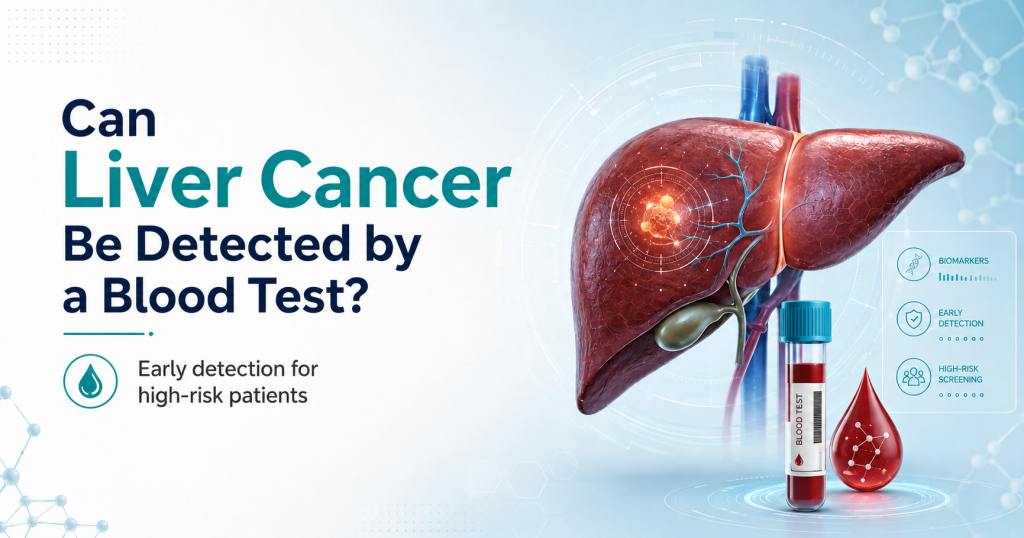
Can Liver Cancer Be Detected by a Blood Test?
Liver cancer can sometimes be detected through blood tests that identify biomarkers associated with tumor activity. These tests are particularly valuable for people at high risk, including those with:
- Cirrhosis
- Chronic Hepatitis B or Hepatitis C
- Non-alcoholic fatty liver disease (NAFLD)
- Non-alcoholic steatohepatitis (NASH)
- Advanced liver fibrosis
- A family history of liver cancer
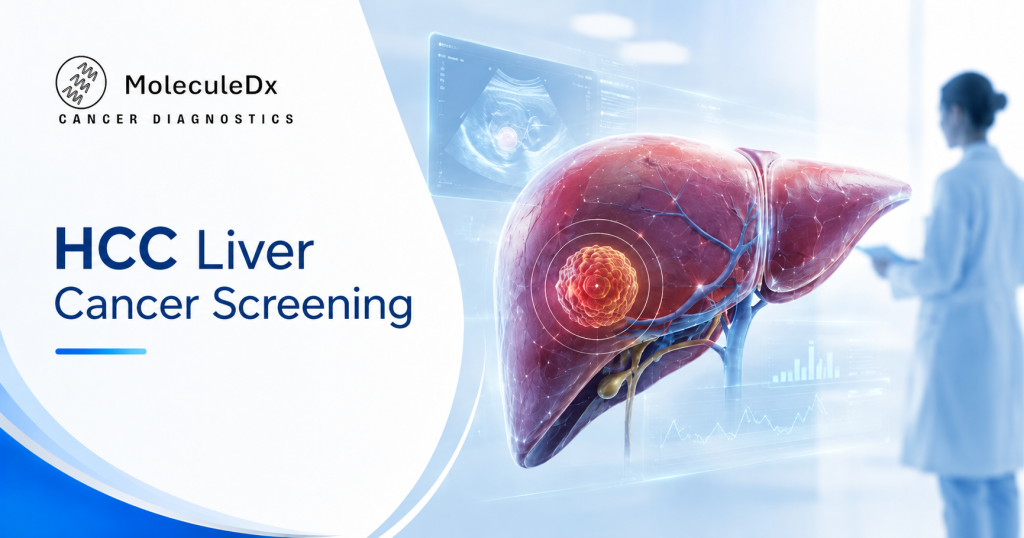
Since liver cancer often develops without noticeable symptoms in its early stages, blood-based screening may help detect warning signs before the disease becomes advanced.
However, blood tests alone usually cannot confirm liver cancer. They are most effective when used alongside imaging tests such as ultrasound, CT scans, or MRI, as well as clinical evaluation.
Quick Answer
Yes. Liver cancer can be detected using blood tests that measure cancer-related biomarkers circulating in the bloodstream.
Traditional blood tests, such as Alpha-Fetoprotein (AFP), have long been used to support liver cancer screening. However, AFP may miss some early-stage liver cancers or produce elevated results due to non-cancerous liver diseases.
Newer molecular blood tests—including RNA fusion analysis and DNA methylation testing—can detect cancer-related genetic changes that may not be identified through AFP alone.
Fusion-detect™ by MoleculeDX is an advanced blood-based liquid biopsy designed to support the early detection of hepatocellular carcinoma (HCC) by identifying RNA fusion gene biomarkers from a simple blood sample.
What Blood Tests Can Detect Liver Cancer?
Several blood tests are used to detect or monitor liver cancer. Each evaluates a different type of biological marker.
1. Alpha-Fetoprotein (AFP)
AFP is the most commonly used blood marker for liver cancer.
Doctors often monitor AFP levels in patients at high risk for HCC.
Limitations:
- Some early liver cancers do not produce elevated AFP.
- AFP can also increase due to liver inflammation, hepatitis, or cirrhosis.
2. AFP-L3
AFP-L3 is a specific subtype of AFP that may improve the accuracy of liver cancer risk assessment.
It is frequently used together with AFP to enhance screening in high-risk patients.
3. DNA Methylation Testing
DNA methylation tests analyze abnormal epigenetic changes in circulating cell-free DNA.
These molecular alterations may appear before clinical symptoms develop, making them promising tools for early cancer detection.
4. RNA Fusion Testing
RNA fusion testing detects abnormal fusion genes created by cancer-related genetic rearrangements.
Because these fusion genes are closely associated with tumor biology, RNA fusion analysis may provide greater specificity than protein-based markers alone.
Fusion-detect™ by MoleculeDX utilizes this molecular approach to identify fusion gene biomarkers associated with hepatocellular carcinoma.
AFP vs DNA Methylation vs RNA Fusion Testing
Test | What It Detects | Advantages | Limitations |
AFP | Protein biomarker | Widely available and affordable | Lower sensitivity for early-stage cancer |
AFP-L3 | AFP subtype | Better risk assessment | Usually combined with AFP |
DNA Methylation | Epigenetic DNA changes | Can detect early molecular abnormalities | May require specialized laboratories |
RNA Fusion Testing | Cancer-specific fusion genes | High specificity and molecular precision | Availability may vary |
Rather than relying solely on protein biomarkers like AFP, molecular testing aims to detect cancer-associated genetic alterations that may appear earlier during tumor development.
Who Should Consider Liver Cancer Screening?
Regular liver cancer screening is recommended for individuals with increased risk, including those with:
- Chronic Hepatitis B
- Chronic Hepatitis C
- Cirrhosis
- Fatty liver disease (NAFLD)
- NASH
- Advanced liver fibrosis
- Long-term heavy alcohol consumption
- Aflatoxin exposure
- Family history of liver cancer
People in these high-risk groups should discuss regular screening with their healthcare provider—even if they have no symptoms.
Symptoms of Liver Cancer
Early-stage liver cancer often causes no symptoms.
As the disease progresses, symptoms may include:
- Unexplained weight loss
- Loss of appetite
- Upper abdominal pain
- Abdominal swelling
- Yellowing of the skin or eyes (jaundice)
- Persistent fatigue
- Nausea
- Weakness
Because these symptoms often appear later in the disease, routine screening remains essential for high-risk individuals.
How Accurate Are Blood Tests for Liver Cancer?
The accuracy of liver cancer blood tests depends on:
- The type of test
- The stage of the disease
- Whether imaging is also performed
AFP alone cannot diagnose liver cancer.
Some cancers produce little or no AFP, while other liver diseases may increase AFP without cancer.
Advanced molecular tests aim to improve early detection by identifying cancer-specific genetic signals.
According to MoleculeDX, Fusion-detect™ demonstrates:
- 95% overall accuracy
- 94.2% sensitivity
- 95% specificity
These figures should always be interpreted by qualified healthcare professionals and considered alongside imaging findings and clinical evaluation.
Why Early Detection Matters
Detecting liver cancer early can significantly improve treatment options.
Patients diagnosed at an early stage may be eligible for:
- Surgical removal
- Liver transplantation
- Radiofrequency ablation
- Microwave ablation
- Localized therapies
- Targeted treatment
Late-stage diagnosis often limits available treatment options and may affect overall outcomes.
The Future of Blood-Based Liver Cancer Detection
Advances in precision medicine are transforming liver cancer screening.
Emerging technologies include:
- Liquid biopsy
- RNA fusion testing
- DNA methylation analysis
- Multi-marker blood tests
- AI-assisted interpretation
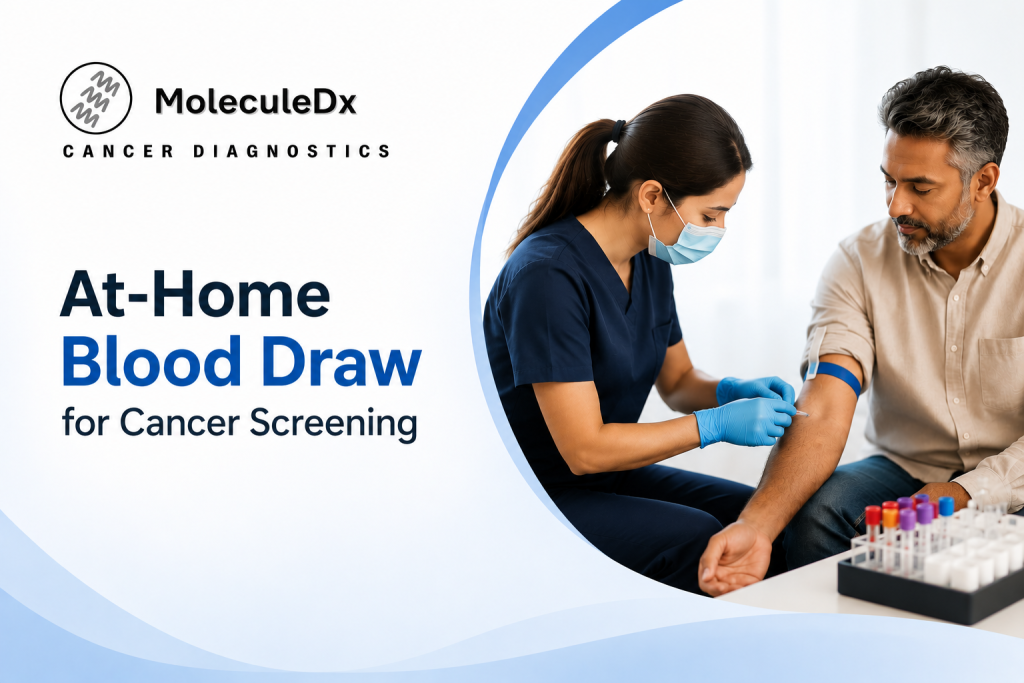
- At-home blood sample collection
These innovations aim to improve early detection while making screening more convenient and accessible for high-risk populations.
Frequently Asked Questions
Can liver cancer be detected by a blood test?
Yes. Blood tests can detect biomarkers associated with liver cancer. However, they are generally used alongside imaging studies and medical evaluation rather than as standalone diagnostic tools.
Can liver cancer be detected before symptoms appear?
Yes. High-risk individuals may benefit from routine blood-based screening, which can detect molecular changes before symptoms develop.
Is AFP enough to diagnose liver cancer?
No. AFP is useful for screening and monitoring but is not accurate enough to diagnose liver cancer on its own.
What is Fusion-detect™ by MoleculeDX?
Fusion-detect™ is a blood-based molecular test developed by MoleculeDX to support the early detection of hepatocellular carcinoma (HCC) by identifying RNA fusion gene biomarkers.
Who should undergo liver cancer screening?
People with cirrhosis, chronic Hepatitis B or C, fatty liver disease, NASH, advanced liver fibrosis, long-term heavy alcohol use, or a family history of liver cancer should consult a healthcare provider about appropriate screening.
Conclusion
Liver cancer is often difficult to detect early because symptoms may not appear until the disease has advanced.
Blood-based screening tests—including traditional biomarkers like AFP and newer molecular technologies such as RNA fusion testing—may help identify liver cancer earlier, particularly in high-risk individuals.
Fusion-detect™ by MoleculeDX represents one of the emerging molecular approaches designed to support early hepatocellular carcinoma detection using a simple blood sample. While promising, blood test results should always be interpreted alongside imaging studies and clinical evaluation by qualified healthcare professionals.
Book Your Consultation Today
If you or someone you know is at increased risk of liver cancer, speak with a healthcare professional about appropriate screening options.
To learn more about Fusion-detect™ and MoleculeDX’s blood-based liver cancer screening solutions, book a consultation with the MoleculeDX team today.
Read more about: https://www.moleculedx.com/can-liver-cancer-be-detected-by-blood-test/
Contact us : facebook , Instagram